Minor Arcana in Tarot
The Minor Arcana is 56 cards that deal with daily life. Your choices, your feelings, your actions, your resources. The everyday stuff that actually shapes how things play out.
While the Major Arcana points to big themes and turning points, the Minors fill in the texture – the context, the timing, the practical next steps. They turn abstract insight into something you can actually use.
What are the Minor Arcana?
The Minor Arcana is 56 cards split into four suits: Cups, Wands, Swords, and Pentacles. Each suit runs from Ace to Ten, then includes four court cards – Page, Knight, Queen, King.
Together, they reflect everyday patterns and decisions. The situations you’re navigating, the choices you’re making, the feelings you’re managing. They’re what turn a reading from “here’s a big theme” into “here’s what to actually do about it.”
Once you understand how one suit flows from Ace to King, you can apply that same pattern to the other suits. Just adjust for the element and theme. That’s what makes learning them faster – you’re learning patterns, not memorising 56 separate meanings.
Tarot Suits Explained
Pentacles
Pentacles traditionally deal with work, money, your body, and resources. Skill building, stability, taking care of the material world. When Pentacles show up, expect slow, steady progress. Guidance about craft, health, routines, and investments that support long-term wellbeing.
You’ll see gardens, coins, earthy landscapes. Symbols of growth, security, and what you get when you put in sustained effort.
Cups
Cups traditionally deal with emotion, intuition, and connection. How you give and receive care. How feelings move through relationships and creative work. When Cups appear, expect honesty about needs, boundaries, and trust. Guidance on healing, empathy, and meaningful support.
Water imagery – rivers, lakes, oceans – showing emotional flow. They reflect joy, grief, love, and longing. No sugar-coating the hard stuff.
Swords
Swords traditionally deal with thought, truth, and communication. Clarity, conflict, decisions that cut through confusion. When Swords show up, expect precision and accountability. Guidance on honest words, fair decisions, calm problem-solving.
Air imagery – clouds, wind, open skies. They reveal both the freedom of truth and the sting of sharp words. Swords don’t fuck about.
Wands
Wands traditionally deal with desire, energy, creative drive. Momentum, courage, the spark that gets things moving. When Wands appear, expect clarity about purpose and pace. Guidance on risk, focus, and the actions that keep a project or calling alive.
Sprouting branches, leaves – symbols of growth and movement. They highlight ambition, inspiration, and the will to push through challenges.
Numbers in Tarot and How They Read
Numbers one through ten show a full arc – from beginning to completion. Aces start things. Twos test balance. Threes build. Fours stabilise. Fives disrupt. Sixes restore. Sevens question. Eights master. Nines refine. Tens complete.
Learn the number first. Then see how it plays out inside each suit.
For example, Fives always signal disruption or challenge. But the flavour changes based on the suit. Five of Cups? Emotional loss. Five of Wands? Competitive clash. Five of Swords? Mental conflict. Five of Pentacles? Financial strain.
Court Cards at a Glance
Here’s the traditional framework for court cards and how I work with them:
Pages
Pages bring curiosity and fresh perspective. New messages, beginner steps, study. They’re not about immaturity – they’re about learning energy.
Pages show where a simple question or a first attempt will unlock movement. Where starting from scratch actually matters.
Knights
Knights bring motion and change. Pursuit, travel, shifts in pace. They’re not chaos – they’re momentum.
Knights show where a clear aim and consistent action will carry you forward. Match the Knight’s style to the suit to understand the tone and method.
Queens
Queens bring mastery and influence that’s felt, not forced. Stewardship, culture, care that gets results. They’re aligned leadership, not performative authority.
Queens show where depth, skill, and protection of values will produce the outcome that actually matters. Not just any outcome – the right one.
Kings
Kings bring visible authority and systems that hold. Structure, strategy, measurable results. They’re about responsibility, not control for the sake of control.
Kings show where firm choices and clear boundaries will keep the work on course. Where someone needs to step up and make the call.
Courts can represent people, aspects of yourself, or approaches to a situation. Context and your question decide which meaning applies.
Pentacles
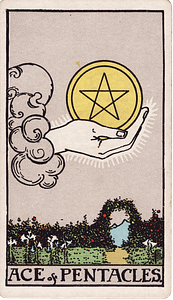
Ace of Pentacles
New Opportunity · Seed · Potential
Something is being offered to you. The Ace of Pentacles carries the energy of a brand new opportunity, a single seed of potential waiting to be planted.
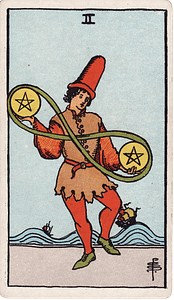
Two of Pentacles
Balancing · Adaptability · Time Management
Life is asking you to juggle. The Two of Pentacles represents the constant act of balancing priorities, responsibilities, and demands on your time.
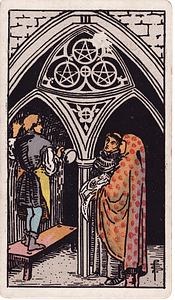
Three of Pentacles
Teamwork · Collaboration · Strengths
Different tools for different jobs. The Three of Pentacles represents the power of working together and playing to your strengths.
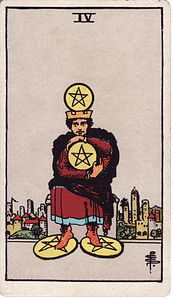
Four of Pentacles
Security · Stability · Control
Holding on tight. The Four of Pentacles represents the desire for security, stability, and control over your resources.
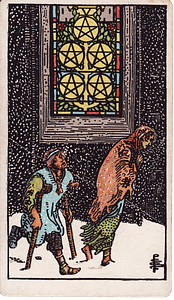
Five of Pentacles
Isolation · Poverty · Idolisation
Something feels like it’s not enough. The Five of Pentacles represents hardship, isolation, and the mindset of scarcity.
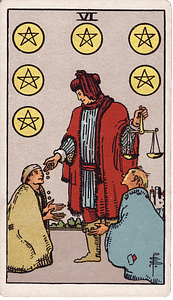
Six of Pentacles
Sharing · Generosity · Receiving
Who’s giving and who’s taking? The Six of Pentacles represents the flow of resources between people, the dynamic of sharing, generosity, and receiving.
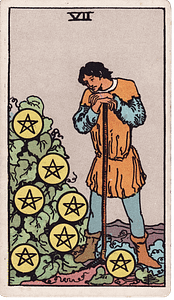
Seven of Pentacles
Stewardship · Investment · Planning
The harvest is underway, but you’re not finished yet. The Seven of Pentacles represents that moment when you can see results starting to come in, but there’s still more work to be done.
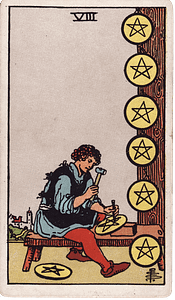
Eight of Pentacles
Hard Work · Skill · Mastery
Put in the hours and perfect the craft. The Eight of Pentacles is the card of dedicated effort, skill development, and the quiet discipline of getting better through practice.
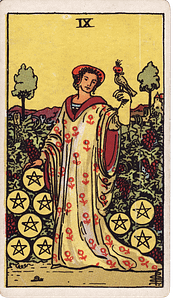
Nine of Pentacles
Abundance · Self-Sufficiency · Independence
You’ve built this, and it’s yours. The Nine of Pentacles represents personal abundance, self-sufficiency, and the satisfaction of enjoying what you’ve created through your own effort.
Ten of Pentacles
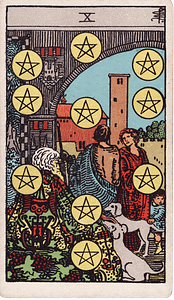
Financial Completion · Security · Legacy
This is bigger than just you now. The Ten of Pentacles represents the fullest expression of material success, where abundance extends beyond personal comfort to create something lasting.
Page of Pentacles
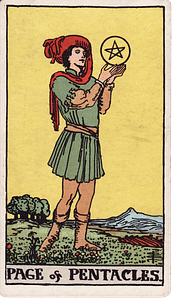
Opportunity · Excitement · Skill Development
Seeds everywhere and the energy to plant them all. The Page of Pentacles represents eager curiosity about the material world, the excitement of new interests, fresh skills to develop, and opportunities worth exploring.
Knight of Pentacles
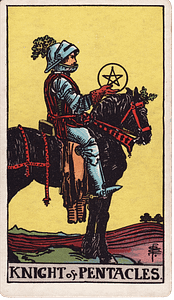
Reliability · Consistency · Hard Work
Slow, steady, and heading exactly where you need to go. The Knight of Pentacles represents determined progress toward a practical goal.
Queen of Pentacles
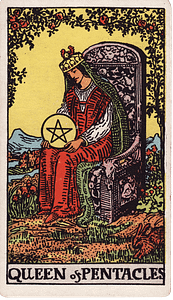
Nurturing · Abundance · Growth
Creating the right conditions for things to grow. The Queen of Pentacles represents the nurturing of abundance, the careful cultivation of resources and wellbeing.
King of Pentacles
Stability · Provision · Security
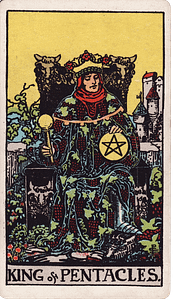
You’ve built it, you’re managing it, and others rely on you. The King of Pentacles represents mature stewardship of resources and the ability to provide through responsible management.
Cups
Ace of Cups
New Relationship · Emotional Renewal · Spiritual Communion
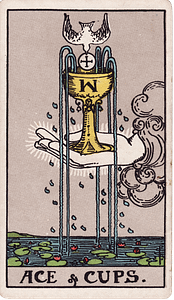
The beginning of something that fills you up. The Ace of Cups represents a fresh emotional start, the arrival of new love, deep feeling, or spiritual awakening.
Two of Cups
Connection · Partnership · Balance
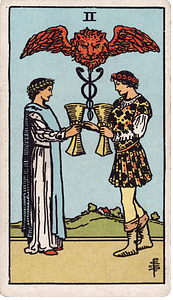
The meeting of equals. The Two of Cups represents genuine partnership and mutual attraction, two people choosing to show up for each other with care and respect.
Three of Cups
Friendship · Community · Abundance of Relationships
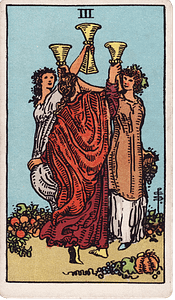
The joy of belonging. The Three of Cups represents friendship, community, and the particular happiness that comes from sharing your life with people who genuinely care.
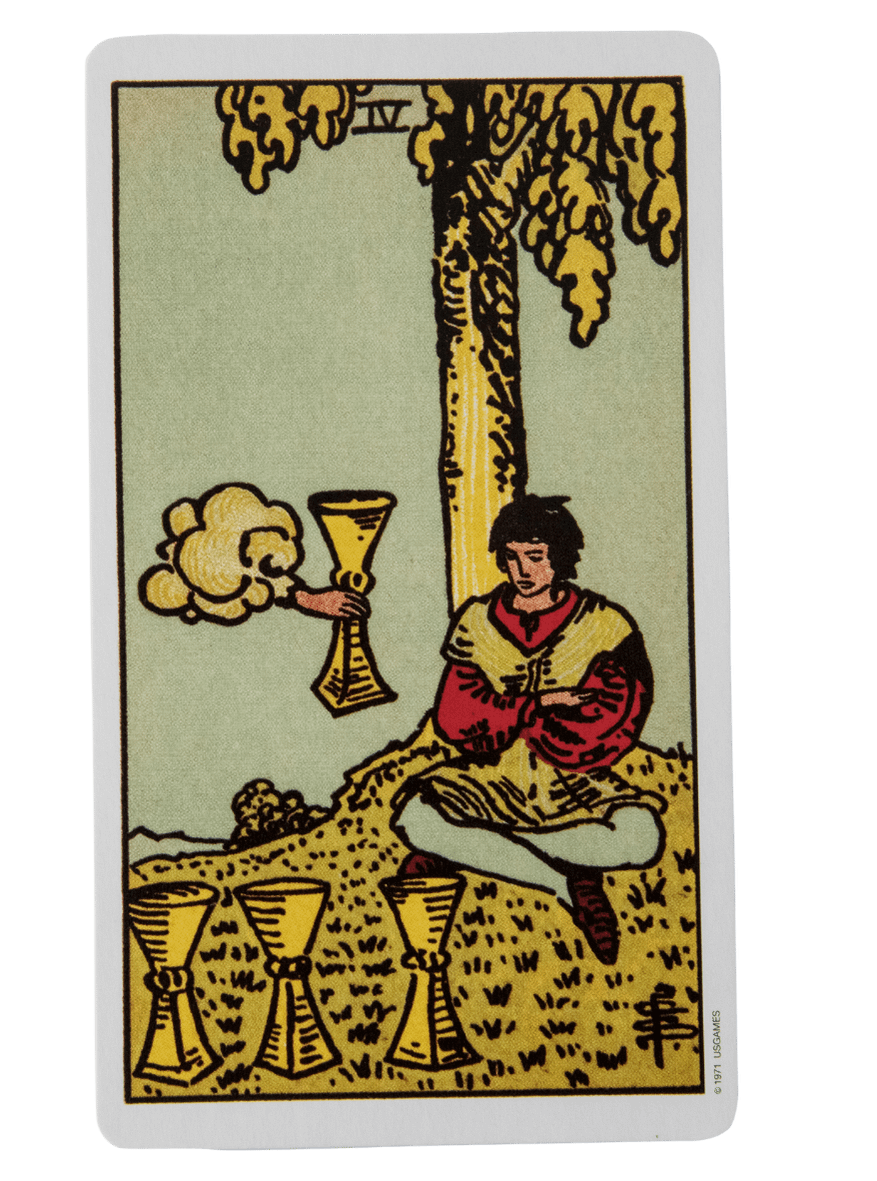
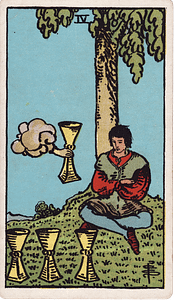
Four of Cups
Apathy · Contemplation · Re-evaluation
The refusal to engage. The Four of Cups represents emotional withdrawal, apathy, and the decision to stop participating.
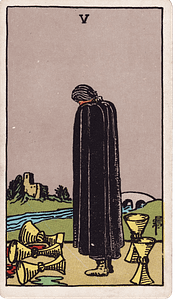
Five of Cups
Regret · Disappointment · Pessimism
The weight of what went wrong. The Five of Cups represents grief, disappointment, and the tendency to fixate on loss rather than noticing what still remains.
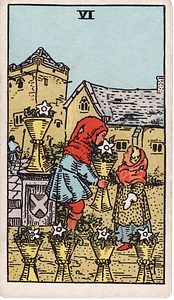
Six of Cups
Nostalgia · Childhood Learning · Revisiting the Past
The pull of the past. The Six of Cups represents nostalgia, memory, and the emotional inheritance of earlier times.
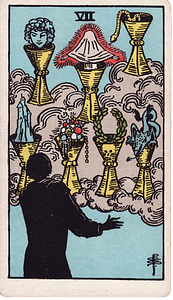
Seven of Cups
Dreams · Choices · Imagination
Too many possibilities, not enough ground beneath your feet. The Seven of Cups represents imagination, fantasy, and the overwhelming experience of having so many options that choosing feels impossible.
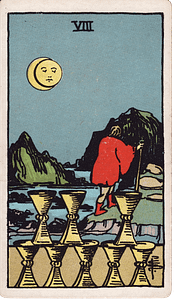
Eight of Cups
Moving On · Emotional Fulfilment · Seeking New Opportunities
The courage to leave. The Eight of Cups represents the moment of walking away from something emotionally unsatisfying in search of deeper fulfilment.
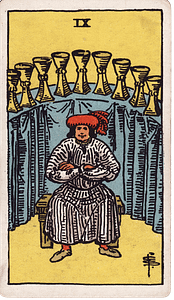
Nine of Cups
Satisfaction · Gratitude · Pride
The display of what you’ve built. The Nine of Cups represents emotional satisfaction, contentment, and pride in the relationships and inner life you’ve cultivated.
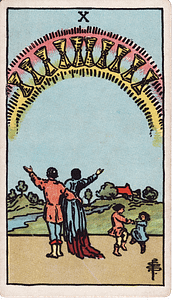
Ten of Cups
Harmony · Joy · Contentment
Emotional life at its fullest. The Ten of Cups represents deep harmony, joy within relationships, and the rare contentment of feeling genuinely at peace with your emotional world.
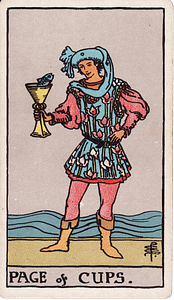
Page of Cups
Curiosity · New Friends · Optimism
Emotional life as an adventure. The Page of Cups represents curiosity, playfulness, and the willingness to be surprised by your own feelings.
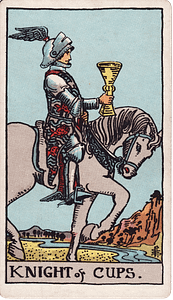
Knight of Cups
Romance · Charm · Sweet-Talking
Desire in motion. The Knight of Cups represents the passionate pursuit of what moves you emotionally, whether that’s romance, creative fire, or something you feel deeply called toward.
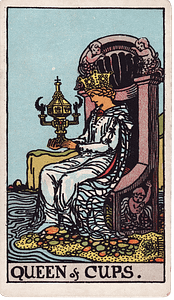
Queen of Cups
Compassion · Intuition · Flow
Feeling without drowning. The Queen of Cups represents deep emotional intelligence, intuitive wisdom, and the ability to hold space for powerful feelings without being swept away.
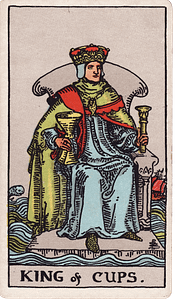
King of Cups
Emotional Balance · Compassion · Diplomacy
Steady in the storm. The King of Cups represents emotional maturity, compassionate presence, and the ability to remain balanced when feelings run high all around you.
Swords
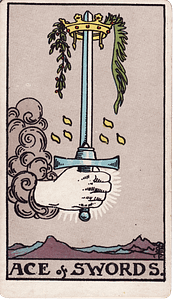
Ace of Swords
Mental Clarity · Breakthrough · Insight
The arrival of clarity. The Ace of Swords represents a breakthrough moment of understanding, a single clean thought cutting through confusion and noise.
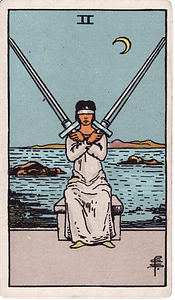
Two of Swords
Balancing Options · Binary Thinking · Closed-Mindedness
The paralysis of indecision. The Two of Swords represents a stalemate, two opposing thoughts creating a deadlock that prevents any movement forward.
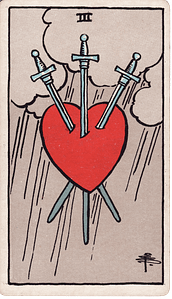
Three of Swords
Heartbreak · Emotional Pain · Overthinking
The pain of a necessary truth. The Three of Swords represents heartbreak, emotional pain, and the grief that follows when something you believed turns out not to be true.
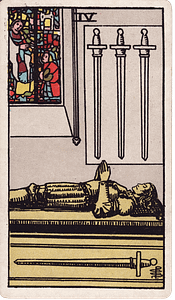
Four of Swords
Rest · Contemplation · Rejuvenation
The wisdom of deliberate rest. The Four of Swords represents a pause for mental recovery, stepping back from activity to let your mind settle and recharge.
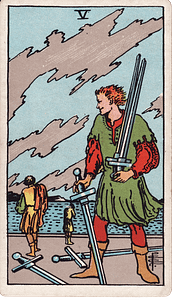
Five of Swords
Disagreement · Conflict · Winning at All Costs
The aftermath of conflict. The Five of Swords represents hollow victories, petty arguments, and the cost of winning at someone else’s expense.
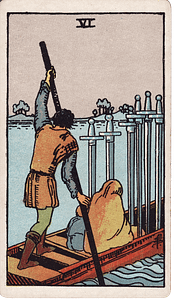
Six of Swords
Change · Journey · Letting Go
The quiet move toward something better. The Six of Swords represents transition, leaving behind a difficult situation and heading toward calmer waters.
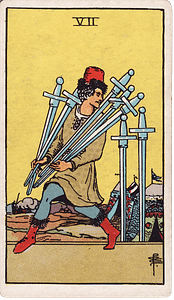
Seven of Swords
Deception · Superficial · Getting Away with It
The cost of shortcuts. The Seven of Swords represents deception, avoidance, and strategies that rely on cunning rather than honesty.
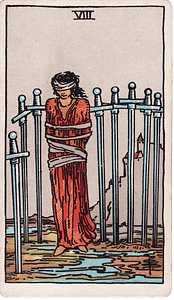
Eight of Swords
Trapped · Overwhelmed · Negative Thoughts
The prison of your own making. The Eight of Swords represents feeling trapped by thoughts, fears, and limiting beliefs that aren’t as solid as they seem.
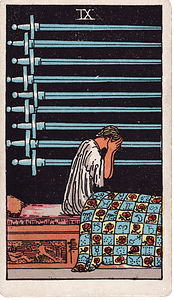
Nine of Swords
Anxiety · Depression · Sleepless Nights
The weight of anxiety. The Nine of Swords represents sleepless nights, spiralling thoughts, and the particular cruelty of a mind that turns against itself.
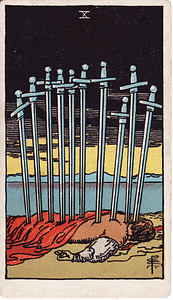
Ten of Swords
Painful Ending · Breakthrough · Hope
The end of a painful chapter. The Ten of Swords represents the point of complete mental exhaustion, where overthinking, betrayal, or burnout has finally run its course.
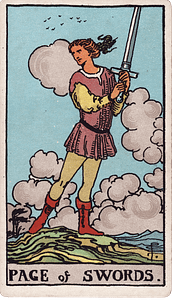
Page of Swords
Curiosity · Openness · Thirst for Knowledge
The thrill of a curious mind. The Page of Swords represents fresh thinking, intellectual curiosity, and the excitement of exploring new ideas without needing to reach conclusions yet.
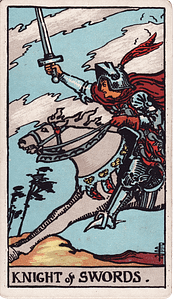
Knight of Swords
Action · Driven · Impulsivity
The force of a mind in full charge. The Knight of Swords represents swift thinking, decisive action, and the ability to cut through confusion at speed.
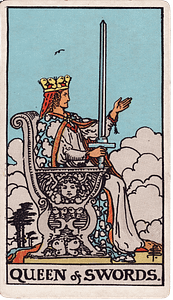
Queen of Swords
Stability · Clarity · Decisiveness
The strength of clear-eyed compassion. The Queen of Swords represents the ability to see situations honestly while still caring deeply about the people involved.
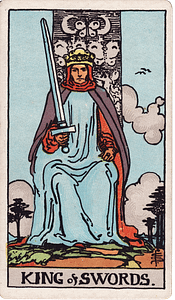
King of Swords
Mental Clarity · Intellectual Power · Authority
The authority of a disciplined mind. The King of Swords represents intellectual clarity, ethical leadership, and the ability to communicate complex ideas with conviction.
Wands
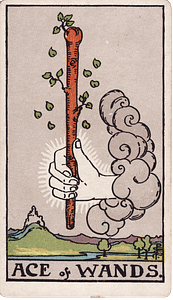
Ace of Wands
New Ideas · Bright Spark · Opportunities
The beginning of something that excites you. A spark catches, an idea lands, and suddenly you can see possibilities everywhere.
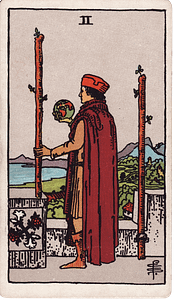
Two of Wands
Planning · Potential · Preparation
You’ve got the world in your hands and a decision to make. The Two of Wands is about standing at the threshold between where you are and where you could go.
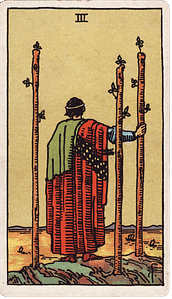
Three of Wands
Expansion · Adventure · Exploration
The adventure has already started but you haven’t left yet. Ships are sailing, plans are in motion, things are happening around you.
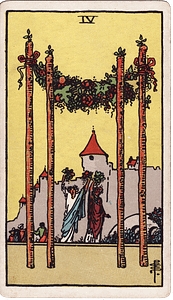
Four of Wands
Celebration · Joy · Homecoming
Something worth celebrating has happened. People coming together, milestones reached, the kind of moment where everything clicks into place and feels right.
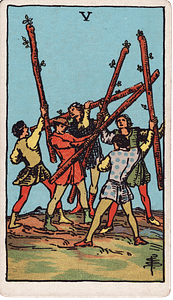
Five of Wands
Conflict · Disagreements · Competition
Tension, clashing, the uncomfortable energy of people who don’t agree. The Five of Wands shows up when conflict is present or approaching.
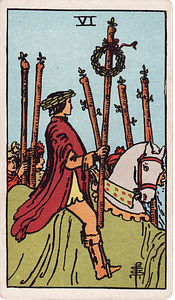
Six of Wands
Success · Recognition · Accolades
Victory. The crowd cheering, the moment you’ve earned, the recognition landing.
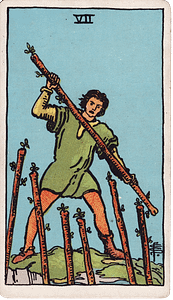
Seven of Wands
Defensiveness · Challenges · Protect Yourself
You’re under pressure and you know it. People are pushing back, challenging what you’ve built, testing whether you’ll stand your ground.
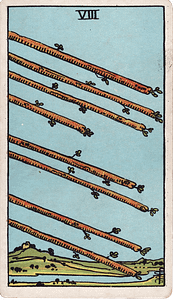
Eight of Wands
Rapid Change · Action · Fast-Paced
Everything’s moving at once and you can’t slow it down. Messages flying, events cascading, momentum building faster than you can track.
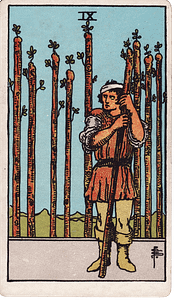
Nine of Wands
Last Stand · Test of Faith · See It Through
You’re tired. You’ve been pushing hard, fighting long, and you’re running out of fuel.
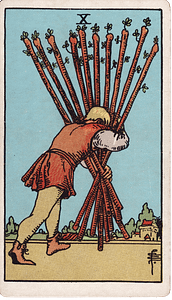
Ten of Wands
Overwhelm · Burden · Burnout
You’ve got too much on your plate and you know it. Arms full, back breaking, struggling to see where you’re going because you’re carrying everything at once.
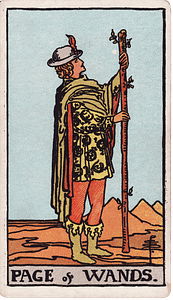
Page of Wands
Excitement · Inspiration · Free‑Spirited
Ideas everywhere. That buzzing feeling when you can’t sit still because everything seems possible and you want to try all of it.
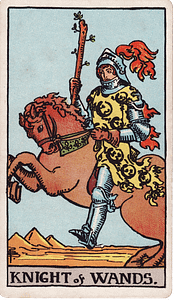
Knight of Wands
Energy · Passion · Charging Forward
Full speed ahead, consequences later. The Knight of Wands charges into things with pure energy and zero hesitation.
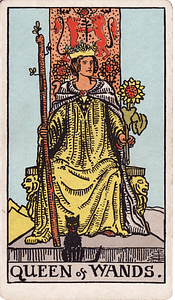
Queen of Wands
Confidence · Independence · Determination
Someone who walks into a room and changes it just by being there. No performance needed, no effort required.
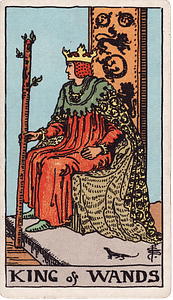
King of Wands
Passion · Visionary Leadership · Inspiration
A natural leader who speaks and people listen. Not because they have to, but because the vision is compelling and the passion is contagious.
Major Arcana vs Minor Arcana
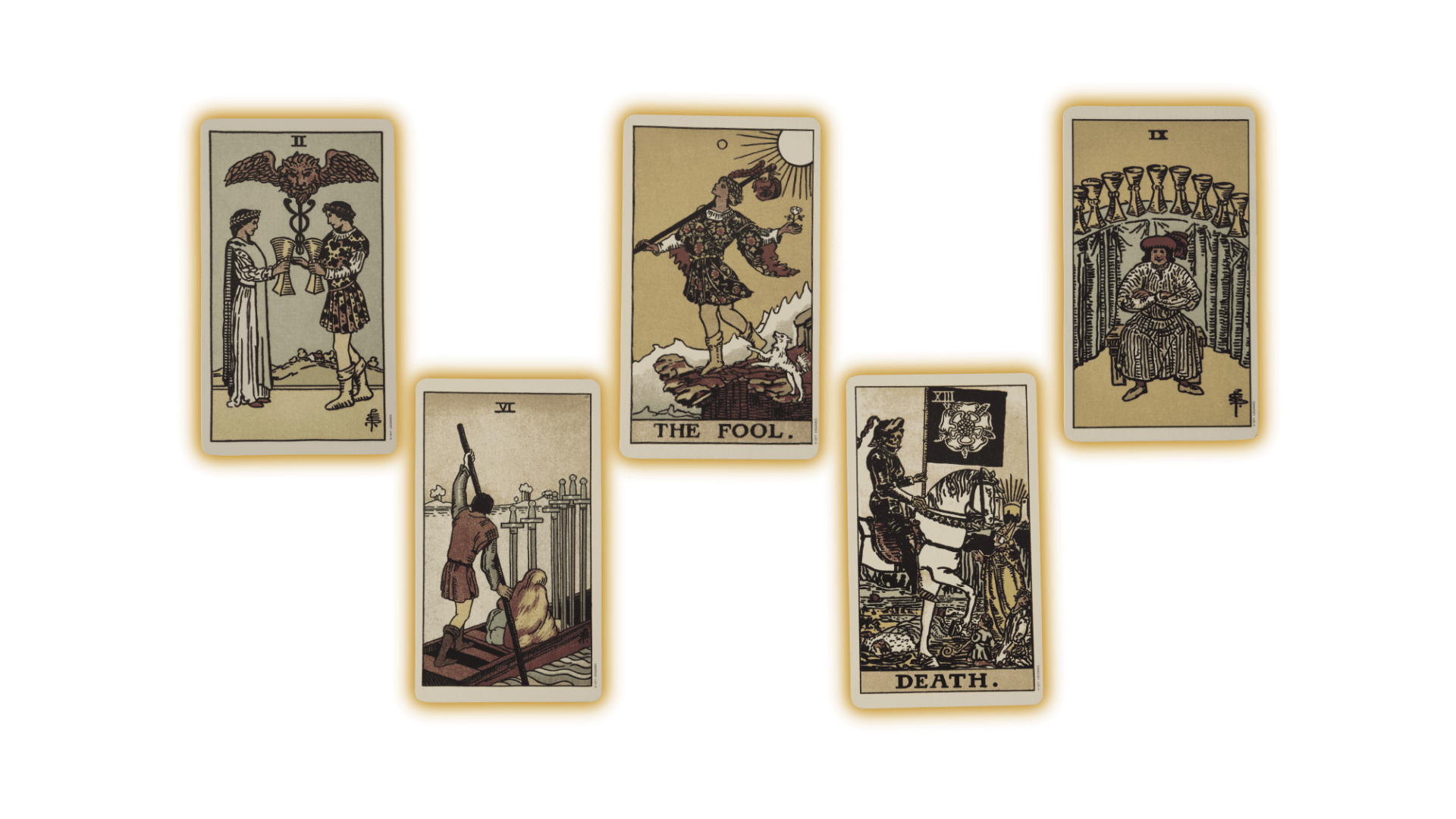
Majors typically set the theme. Minors show you how it’s actually playing out.
When a Major appears, that’s your lesson or turning point – the core of what’s happening. When Minors cluster, they’re giving you the plan and the detail – what to do, when, and how.
Together they keep a reading both meaningful and practical. You get insight that actually translates into action that fits real life.
How to Read the Minor Arcana
Start with the suit – what area of life are we talking about? Cups (emotion), Wands (drive), Swords (thought), Pentacles (resources).
Then look at the number – where are you in the cycle? Beginning, middle, challenge, completion?
Then look at the actual image. What’s happening? What’s the mood? What do the symbols and body language tell you?
Translate all of that into plain language. Not textbook phrases – actual everyday words that make sense for this person’s situation.
End by deciding what can help now, what can wait, and what the most honest next step is.
You can also look for patterns across the spread. Are the Minors repeating themes? Contrasting each other? Building on each other? How do they interact with any Majors that showed up? This builds a richer story.
When Minor Arcana Appears in Clusters
A run of one suit spotlights that area of life. Loads of Swords? You’re stuck in your head, overthinking, dealing with communication issues. Loads of Pentacles? It’s all about work, money, body, practical stuff.
When a number repeats, it shows where you are in a cycle. Use clusters to set priorities and figure out where to slow down or speed up.
If you get a clear sequence in the same suit – like Six, Seven, Eight – that suggests ongoing progress or escalation. If the numbers jump around, it might mean scattered focus or multiple things happening at once.
Common Mistakes to Avoid
Reading by keywords only
Keywords help you start, but the image, the position, and the context matter more. Look at body language, what people in the card are looking at, how the card flows with the others around it.
Translate into your own words. Use plain language that fits the person’s actual reality. This keeps your interpretation grounded and flexible instead of just regurgitating memorised definitions.
Ignoring numbers
Numbers tell you where you are in the story. Skip them and you miss the stage of the work – you lose the thread of the reading.
Always note the number, then add the suit context and image detail. This makes each card’s role in the bigger pattern clear and easy to apply.
Treating courts as people only
Courts can be people, roles, or approaches. Ask yourself: does this card describe an actual person, a voice inside the querent, or a way of acting in this situation?
Let the question and the spread decide. Don’t force a court card to mean only one thing.
Mixing suits without balance
Too many suits in one answer blurs the point and confuses priorities. Group by suit first to find the dominant theme. Answer that clearly. Then add one supporting point from the next most active suit if needed.
Keep the story structured and the advice focused. Don’t scatter the message.
Overlooking suit balance in a spread
Pay attention to what’s dominant and what’s missing.
A spread heavy in Pentacles but light on Cups? You’re prioritising work and stability over emotional needs. Full of Swords with no Wands? All analysis, no action.
These patterns shift the whole reading. Don’t ignore them.
Study Tips
Pick one suit for a week. Pull a card each day and write a short reflection on how that suit shows up in real life. Keep it specific and grounded. You’ll start spotting clear patterns that connect the suit’s themes to daily events.
Create a number map. Ten rows (one for each number), four columns (one for each suit). In each box, note how that number’s energy plays out in that suit. Quick reference that makes your readings sharper.
Build a court reference from your own life. For each rank in each suit, write down a person, role, or approach it could represent. Update it as your understanding deepens. Make it yours, not someone else’s interpretation.

Frequently Asked Questions
What’s the easiest way to start learning the Minor Arcana?
One suit at a time. Pick Cups, Wands, Swords, or Pentacles and learn its core theme first. Then pull from just that suit daily and see how it shows up in real life. Keep notes in your own words, not copy-pasted from a book. The meanings need to feel natural to you, not like you’re reciting someone else’s interpretation.
Do I need to know the Majors before learning the Minors?
No. You can start with either. Majors give you big-picture themes. Minors teach you the everyday patterns that make readings feel relevant and practical. Most readers learn them alongside each other because that’s how they actually work in readings – together, not separately.
How long does it take to learn the Minor Arcana?
Depends how often you practise. With daily use, you could feel confident in a few months. Without regular practice, it’ll take longer. Consistency matters more than speed. You’re not trying to memorise 56 cards – you’re building a relationship with them. That takes time and repetition.
Can reversed Minor Arcana cards change the meaning?
Yeah, reversals can shift things – blocked energy, delays, opposite meanings, the internal side of what the card’s showing. Whether you read with reversals is up to you. Some readers do, some don’t. Neither approach is wrong. Pick what works for your style and stick with it.
What’s the difference between Minor Arcana in tarot and playing cards?
The structure is similar – suits and numbers – but tarot has richer imagery and an extra court card (Pages). Playing cards can be read intuitively, but tarot gives you more symbolism and structure to work with. The pictures tell stories. That makes building interpretations easier and deeper.
